




In a nutshell:
The soft life isn’t about opting out of responsibility or living in constant rest. It’s about building a way of living that doesn’t require you to abandon yourself just to keep up.
This post will help you reframe what soft living actually looks like in real life — especially if you’re burned out, overwhelmed, or tired of starting over.
- A soft life is about sustainable rhythms, not escape
- Soft living prioritizes nervous system safety over constant pushing
- You don’t need to quit everything to live more gently
Why the “soft life” feels confusing right now
Currently, the concept of a soft life is often portrayed as an all-or-nothing lifestyle. On social media, it looks like slow mornings, no obligations, and endless time to rest — with very little context around how people actually got there.
For many women, that version of softness feels unrealistic. You still have responsibilities. You still need structure. And you still want to move forward in your life — not opt out of it.
This creates an internal conflict. You crave ease, but everything you see makes it feel like ease only exists if you abandon discipline, consistency, or ambition altogether. When that doesn’t feel possible, the soft life starts to feel like another standard you’re failing to meet.
The truth is, the confusion isn’t because you don’t want softness. It’s because the version being shown doesn’t account for real life capacity.
What a soft life actually looks like in real life
A soft life isn’t lazy, and it isn’t chaotic. It’s not about doing nothing — it’s about doing what matters in a way that doesn’t constantly overwhelm your system.
In real life, soft living looks like:
- Building routines that support your energy instead of draining it
- Choosing consistency that feels gentle instead of rigid
- Creating structure that holds you without squeezing you
Softness doesn’t remove responsibility — it changes how you carry it. It allows you to move through your days without relying on pressure, guilt, or self-punishment to stay functional.
When your routines are designed with your nervous system in mind, you don’t have to force yourself through every task. You begin to move with more ease, even when life is still full.
Why starting over isn’t the answer
When you’re burned out, the instinct is often to reset everything. New routines. New plans. A complete rebuild. But constantly starting over is one of the fastest ways to stay stuck in exhaustion.
Each restart requires energy — clarity, motivation, and emotional bandwidth. When those resources are already depleted, rebuilding your life from scratch only deepens the burnout.
What actually helps isn’t a fresh start. It’s a supportive system.
Soft living works when you stop trying to reinvent yourself and start creating gentle structures that fit the life you already have. Instead of chasing motivation, you rely on rhythms that help you return to yourself — even on low-energy days.
That’s where healing and consistency begin to coexist.
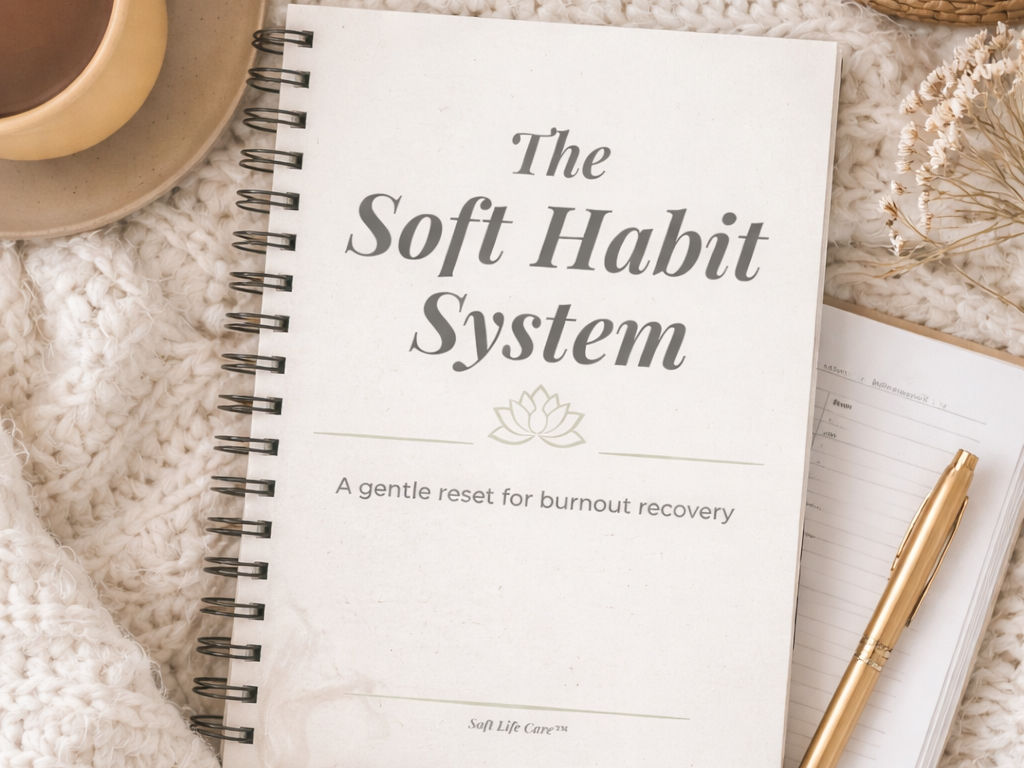
 Soft Life Care